


I still have about $33,000 or so in student loan debt that I am hardly paying off but a quick tip for those who did not go to college for creative writing… don’t tell the reader something, show it.
This goes for whatever medium your storytelling is being told through. Show me through descriptions of homes, action, dialogue, clothing, food, and all that makes up culture.
At times as a consumer of storytelling (whether a book, a graphic novel, a video game, etc.) it feels like many creators think their audiences are incapable of picking up on subtleties.
As though their audience haven’t experienced an entire life before picking up their story. I get so disappointed when creators have a character word vomit exposition at me and my hyperactive brain immediately disconnects from the story. Please don’t connect the dots for me, that is literally what makes me want to consume a story. LET ME DO THE WORK.

I know there is a lot of talk about media literacy being low and individuals having difficulty discerning nuances or metaphor in a story because of this but I don’t think the answer is to just spoon feed details to the audience. There are whole YouTube accounts and so much fan media that will explain it to those who may need a leg up on subtleties and easter eggs.
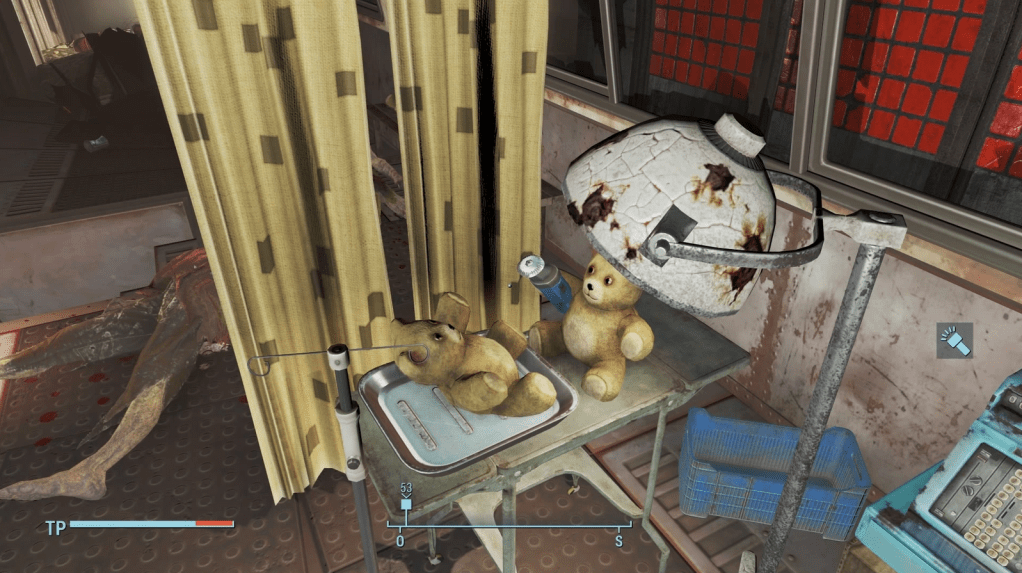
A great example of this is when video games have items you locate throughout levels that piece together the background or history of the world. In Bioshock, you’d listen to tape recordings and in Baldur’s Gate 3 you could read countless books and letters.
In Fallout 4, you could see how homes were set up, moments frozen in time during an apocalyptic event and having to compare them to your current surroundings.
The teddy bear scenes were always my favorite little details. Some of audience might not pick these things up and instead stick to the main story line and action but for those who find them, they are rewarding.
And if you have ADHD, like me, that reward equals dopamine and is what keeps my brain active but also, interested.
Exposition doesn’t have to be a block of text or a character just talking at someone. It can be a letter, a song, a poem, graffiti, an article, and so much more! I always love when writers get creative in how they weave the history or details of the world through different styles of writing.
Whole courses for my degree were dedicated to taking our stories and feeding them through different written mediums to see all the sorts of ways we can feed information to the audience.
I too have to remind myself of this when I write. And I realized at one point that my need to give every bit of detail is my own need for control.
When I create something and then hand it out to the universe, I cannot always control what people do and do not interpret from the piece. Too often I muddy up my writing with excess detail and so much of my editing is going back and removing the excess fat. Then I take that fat and I rework it — I try to integrate it into the actions, dialogue, or scene.
Stop giving me a prologue that reads like a textbook just so I understand whatever political strife is happening at the time because my ADHD hates reading it! (Most of the time, I just skip it.)
Could you instead take a moment to describe where the characters are in the scene? Explaining where they live can give so much insight into who these people are and their priorities.
I don’t need every nook and cranny, but show me what you want me to see, what’s essential for me to see. Do you know if the cupboards are bare? Describe that to me as the character tries to feed their siblings.
Oh, the character doesn’t like their dad? Please don’t tell me.
Could you show me their reaction and how they speak to that parent?
How does their posture change when they are in the room with their parent?
I’d like to see how the parent reacts to their child not enjoying them. How do they talk to their child?
Remember, as the creator, you have ruminated in this world for so long, but the audience has just gotten here. When I am writing, I get so eager to continue the story that I have to stop myself and say, “Wait, we just got here — what did I miss?”
 Samantha LaFountain